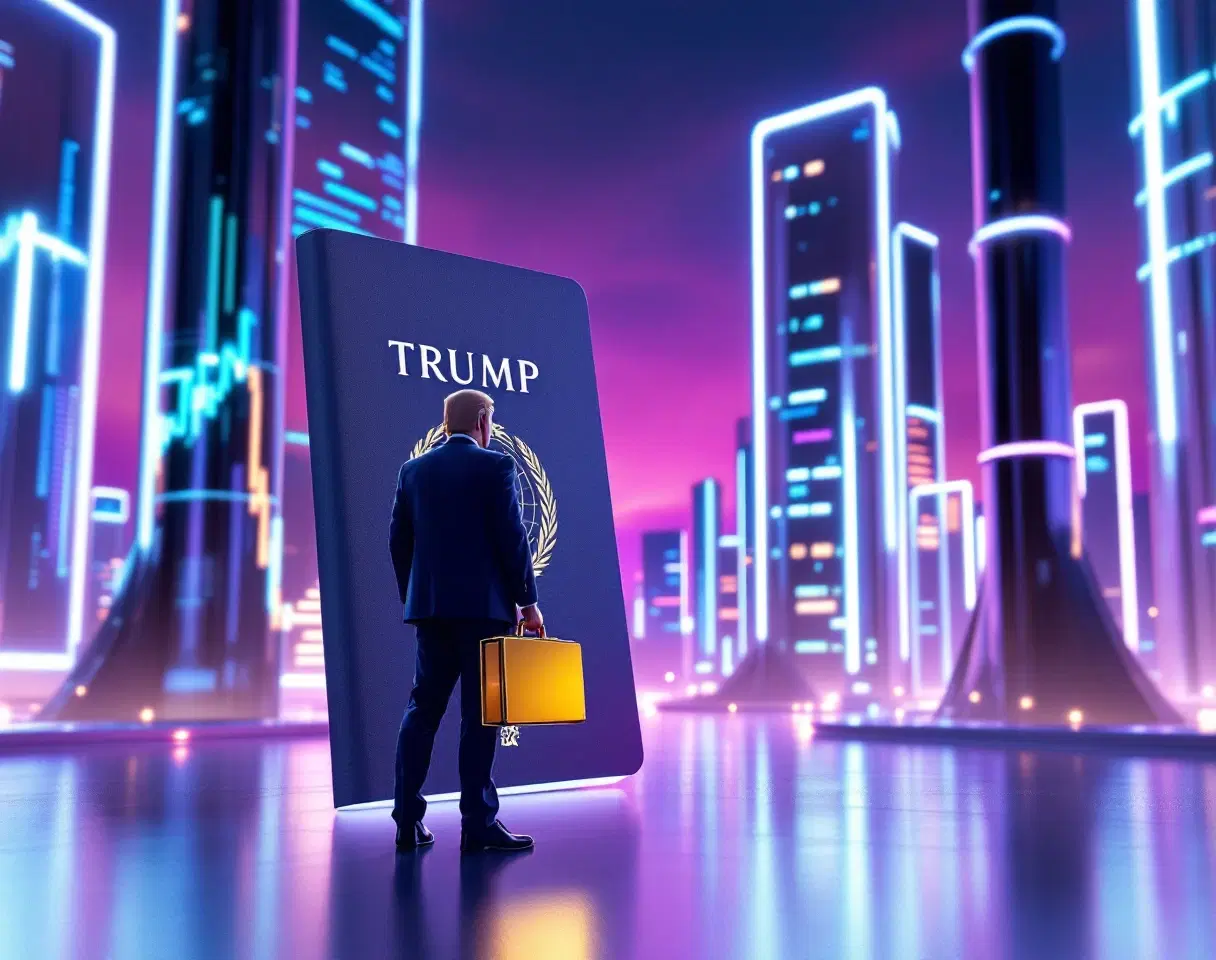
The proposed Trump passport ignites debates on democracy and branding, raising concerns about personal ambition in national symbols. Explore this controversy now.
May 27, 2026 |
May 26, 2026 |
May 26, 2026 |
May 25, 2026 |
A Clash of Politics and Personal Branding
Picture this: a passport adorned with the visage of Donald Trump, stirring a whirlwind of debates about where the line between political figure and personal branding should be drawn. This audacious proposal for a limited-edition Trump passport compels us to examine its ramifications on democratic integrity and the trust we place in our institutions. As America gears up to commemorate its 250th anniversary, this passport, once a unifying national emblem, now risks becoming an instrument of personal glorification.
Fast forward to May 2026: a coalition of Democratic senators, spearheaded by Jeff Merkley of Oregon, has audaciously taken on the Trump passport initiative. In a pointed letter addressed to Secretary of State Marco Rubio, they vehemently rejected the idea, calling it “a vehicle for personal promotion” and affirming that a sitting president has no rightful place on a U.S. passport. Their demand to halt this design was underscored by fears of an erosion of democratic principles, with the senators asserting, “We implore you to abandon these plans due to the anti-democratic consequences it could unleash.”
With Trump’s face superimposed over the Declaration of Independence, critics have raised alarms about blatant political opportunism. This begs an unsettling question: when did our national travel documents morph into a blank canvas for self-agrandising?
As the discourse surrounding the Trump passport amplifies, it raises eyebrows about whether a presidential likeness on such a vital document denotes state symbolism or rampant branding. This inquiry becomes crucial as the nation’s cultural narrative increasingly intertwines with politics, transforming the passport from a mere travel document into a highly contested artifact.
In the midst of this branding frenzy, we face a worrying trend: the commodification of national identity. The rising prevalence of commemorative items flaunting Trump’s name—gracing updated U.S. currency and even the so-called Trump Gold Card—signals a tectonic shift in how we view the essence of state identity. Should these exclusive national items, inherently linked to our collective identity, devolve into mere commodities for political gain? This question looms, especially as proposals gain traction to enshrine Trump’s likeness on Mount Rushmore or rename Dulles International Airport in his honor.
The ongoing skirmish over the Trump passport is merely a reflection of deeper ideological rifts within the regulatory framework governing presidential images in public settings. Merkley’s prior legislative attempts to stave off Trump’s likeness appearing on public state assets accentuate the philosophical dilemmas around representation in America. What does it imply when our shared spaces and symbols dangerously flirt with becoming vehicles for individual gain?
Each layer of this discourse unearths paramount discussions about how citizens, lawmakers, and taxpayers can navigate the intricate divide between governance and political branding. Merging personal image with public benefit blurs essential lines of accountability, jeopardizing public trust in the institutions meant to serve the common good.
The ramifications of this trend in political branding reach far beyond aesthetic concerns. We must confront the implications for the future of American governance if political figures continue to leverage public resources for personal ambition. Such actions risk weakening the trust we afford to governmental institutions, as vital state symbols wade dangerously close to becoming mere commercial ventures for the ambitious.
Public sentiment serves as a key counterbalance in this evolving narrative. Citizens must remain vigilant in their engagement with how state symbols are reshaped by political whims, continuously evaluating the potential fallout on the frameworks that uphold our democracy.
The trumpeted proposal for a Trump passport transcends the confines of a mere travel document; it stands as a stark confrontation with the murky crossroads of political branding and integrity. As this conversation simmers on the back burner, we must critically examine how the infusion of personal promotion threatens the sanctity of spaces once designated for national representation.
Moving forward, it is essential that lawmakers and citizens engage in meaningful dialogue to chart a course through this complex landscape where personal imagery and public assets intersect. The discourse surrounding the Trump passport serves as a potent reminder: the preservation of democracy demands our unwavering vigilance to maintain the integrity of national symbols and the profound meanings they embody within our shared identity. Now is the time to confront these pressing issues head-on, as the delicate balance between governance and branding teeters under the weight of ever-looming political ambitions.