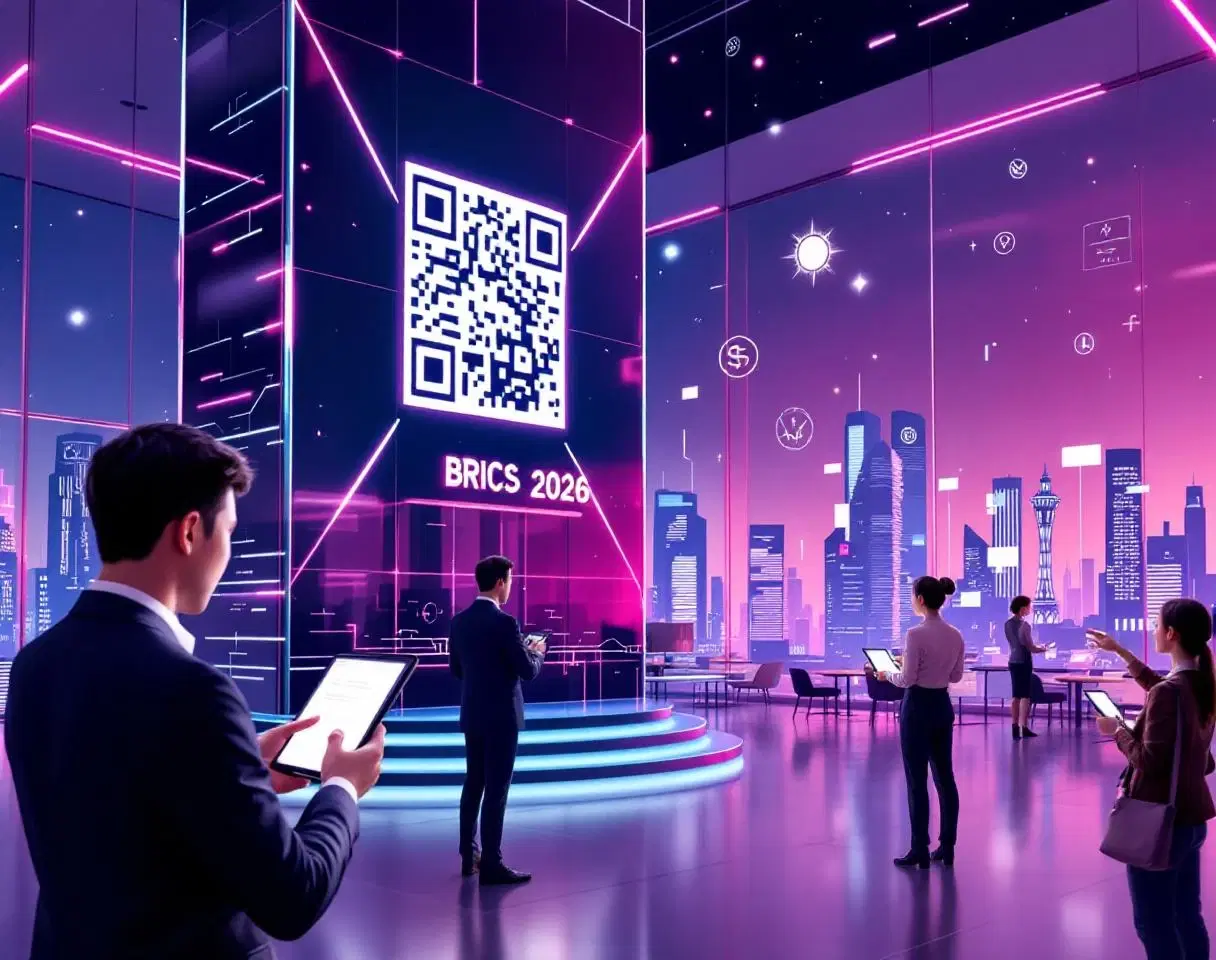
BRICS revolutionizes global finance with a dollar-free payment system between China and Indonesia, leveraging QR code technology for seamless transactions by 2026.
April 25, 2026 |
April 25, 2026 |
April 25, 2026 |
April 25, 2026 |
Forget everything you thought you knew about international finance. A seismic wave is about to crash over the global payments landscape, spearheaded by the BRICS coalition. Circle April 30, 2026, on your calendar—this is when China and Indonesia will unveil an audacious, dollar-free payment system. Imagine streamlining cross-border transactions through advanced QR code technology, poised to upend the US dollar’s entrenched supremacy. As we peel back the layers on this groundbreaking strategy, we’ll unveil its monumental implications for businesses and investors alike in an evolving economic reality.
The BRICS nations—Brazil, Russia, India, China, and South Africa—are forging a path to diminish dollar dependence in global commerce. The upcoming launch of a dollar-free payment network between China and Indonesia is not just a test run; it’s a bold proclamation of intent. This initiative is setting the groundwork for a new interoperable payment framework called QRIS (Quick Response Code Indonesian Standard). It stands as a testament to the increasing cohesion among these countries, steering the world toward a more balanced monetary system.
At the core of this initiative lies the transformative potential of QR code payment technology, designed to facilitate instantaneous transactions between users in China and Indonesia. By bypassing the US dollar as an intermediary, this system promises to reduce transaction fees and minimize reliance on traditional banking systems. Initial trials have already indicated its viability, registering an impressive 1.64 million transactions, highlighting an unmistakable appetite for alternative payment solutions.
BRICS’ proactive strategy to lessen dollar dependency represents a cataclysmic shift in international trade frameworks. Economic corridors connecting these nations could witness an unprecedented increase in transaction volumes, urging other regions to emulate this new model. For businesses, embracing digital payment innovations will be crucial—fail to adapt, and you risk being swept aside by the tide of change. This transformation is likely to accelerate the acceptance of alternative currencies and stablecoins, especially as mobile payment environments thrive across Asia.
The emergence of a BRICS-backed, dollar-free payment landscape opens up a wealth of possibilities for investors. As traditional financial architectures make way for dynamic alternatives, opportunities will abound for those willing to engage with BRICS currencies and their digital forms. With centralized exchanges facing mounting challenges, savvy investors are poised to tap into emerging markets and the fresh possibilities offered by this evolving financial ecosystem.
This BRICS initiative aligns seamlessly with Asia's burgeoning mobile payment trends. As professionals across Latin America assess these innovations for inflation hedging with stablecoins, the interplay between BRICS currencies and decentralized finance (DeFi) is becoming increasingly significant. The rise of gas-efficient decentralized exchanges (DEXs) is offering users self-custody options that mitigate risk while fostering financial creativity.
While the prospects stemming from the BRICS-led dedollarization initiative are compelling, it’s essential to approach the future with caution. The successful rollout hinges on user adoption and thorough system integration. Vigilance against vulnerabilities like wash trading is crucial to maintaining public trust. Navigating this terrain demands a delicate balance of technological progress and user assurance, ensuring that sustainability takes precedence.
As the BRICS nations gear up to launch their revolutionary dollar-free payment initiative, the global financial landscape teeters on the brink of a major transformation. Leveraging QR code technology to facilitate cross-border transactions is no small feat; it could rewrite the rules of engagement in international trade. Now more than ever, investors and businesses must stay alert and adaptable, for the influence of the dollar may soon wane, giving way to innovations powered by BRICS collaboration. With Indonesia's cautious stance on currency stability lighting the way, this partnership may well herald a new chapter in economic cooperation, fundamentally reshaping the international monetary ecosystem. The foundations are now laid; the world stands ready to witness the dawn of a new financial order.