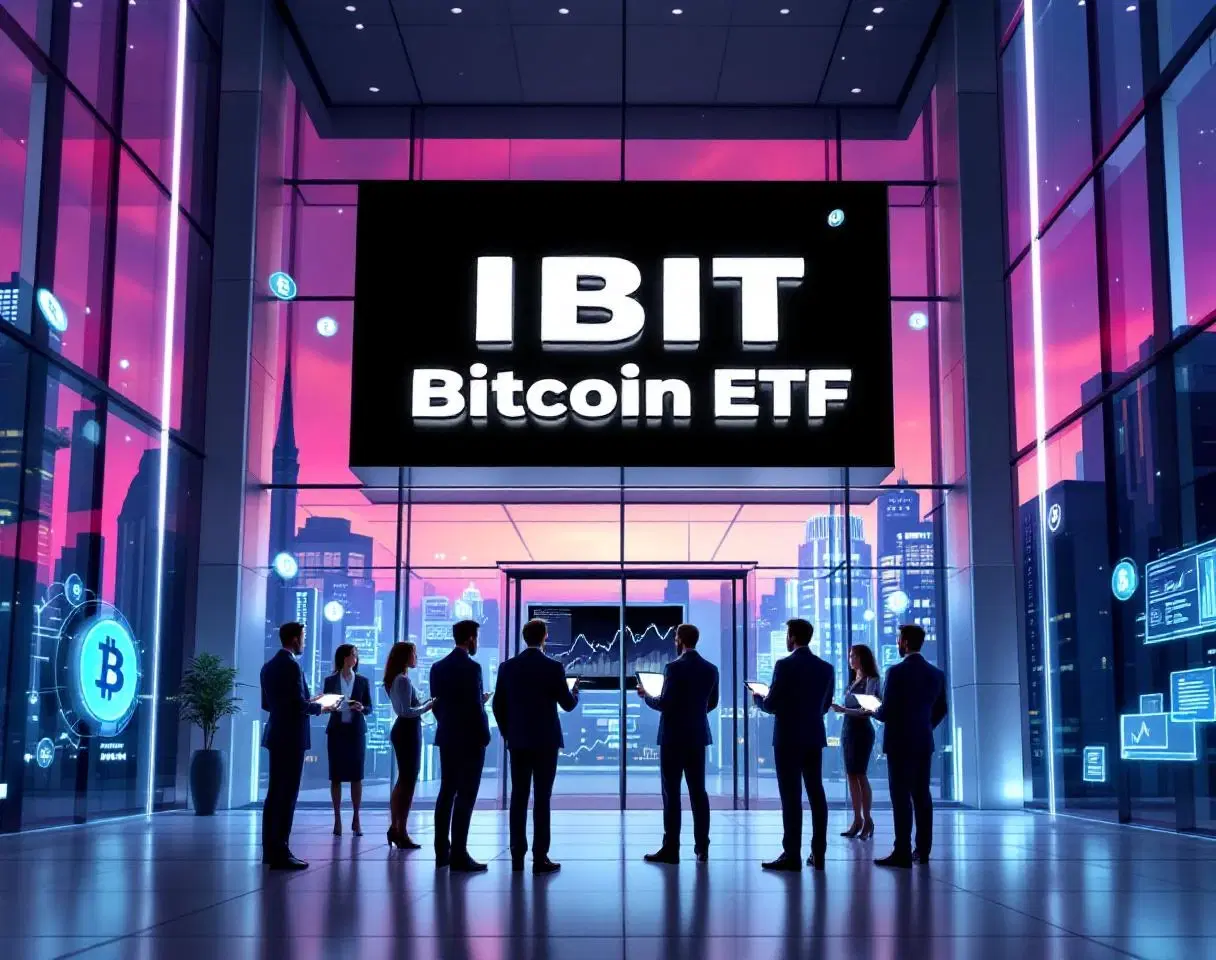
BlackRock's launch of the IBIT Bitcoin ETF signals a major shift in crypto asset management, impacting Bitcoin liquidity and institutional investment dynamics.
August 24, 2025 |
August 24, 2025 |
August 24, 2025 |
August 24, 2025 |
At a time when the world of finance teeters on the brink of transformation, BlackRock’s audacious launch of the IBIT Bitcoin ETF has ignited a revolution in the cryptocurrency landscape. This initiative transcends mere diversification schemes; it’s a daring plunge into a realm that fuses the groundbreaking potential of digital currencies with the unwavering bedrock of conventional finance. As institutional investments begin to dominate, the once-independent territory of crypto finds itself reformed, with a robust new force behind the wheel.
The saga of Bitcoin has traditionally thrived on the principle of decentralization, a hallmark that has defined its allure. However, as BlackRock strides deeper into these waters, the narrative shifts dramatically. Reports from CryptoQuant suggest an alarming trend: institutional holdings of Bitcoin are outpacing those of established custodians like Binance and Coinbase. This transfer of Bitcoin not only underscores a dramatic power shift but also suggests a departure from the decentralized ethos that initially drew enthusiasts to crypto. In many ways, the impact of this ETF initiative is reshaping the landscape of digital asset custody as one more attuned to institutional frameworks.
With the rise of ETFs like IBIT, a troubling supply shock emerges within the Bitcoin market, squeezing the liquidity that once flowed abundantly through exchanges. As more Bitcoin finds refuge in the hands of institutional investors, the ramifications are wide-reaching. The stockpiles of Bitcoin available on various trading platforms are tapering off, raising significant questions regarding future liquidity. This evolution reveals not just a shifting power dynamic in trading practices but also forces a reconsideration of what it means for Bitcoin to function as a fluid, tradable commodity.
As institutional investment takes precedence in Bitcoin markets, a conversation emerges about the sustainability of the original ideals that champion decentralized finance. When institutional capital becomes the prevailing influence, the community must grapple with reconciling these entrenched values against a backdrop of increasing corporate control over the cryptocurrency narrative. This shift stands as a reflection of broader market tendencies but also unveils a web of implications that could redefine the future of cryptocurrencies as they undergo integration into mainstream financial systems.
Platforms like CryptoQuant serve as invaluable interpreters of the shifts underway as institutional involvement intensifies. Their analyses illuminate the strategic thinking that propels institutional investments and draw attention to how these strategies shape market behaviors, liquidity scenarios, and trading patterns. To genuinely comprehend these dynamics is crucial; it equips stakeholders to maneuver through the increasingly intricate interplay between the famed principles of decentralized finance and the regimented realm of institutional trading.
The swift ascent of BlackRock’s IBIT ETF signifies far more than a mere change in Bitcoin holdings; it represents a crucial evolution within the cryptocurrency narrative. This juncture blurs the lines dividing traditional financial management and cutting-edge digital asset utilization, charting a crucial chapter in the story of crypto's maturation. As we stand on this threshold, the future unfolds with institutional investment not only formalizing but perhaps even directing the path that cryptocurrency follows. This evolution challenges the core principles of decentralization and autonomy that gave rise to the crypto revolution, prompting both reflection and anticipation. The unfolding saga signifies a distinctly pivotal moment in financial history, one that demands our close attention.